← All faults
Travel is weak, or dies on a grade
Travel. Flat ground is fine; a slope is not. Weak travel with a normal swing almost always lives in the two-speed control, the travel relief, or the final drive — not in the main pump.
Travel. Flat ground is fine; a slope is not. Weak travel with a normal swing almost always lives in the two-speed control, the travel relief, or the final drive — not in the main pump.
Switch speed 1 / speed 2 and watch travel speed and pressure change. No change means the control is stuck.
Stall one track against a bank, read the gauge at the motor port, compare with the catalogue setting.
Drain the gear oil: metal paste on the plug magnet means the reducer, not the hydraulics.
If swing and arm are also slow, test the pump before touching travel. Flow test, not pressure.
One track at a time against an immovable bank. Compare left and right; within 1 MPa means the fault is shared.
Speed 2 to speed 1 should halve travel speed and roughly double torque. Watch it happen, do not trust the switch light.
Fifty millilitres from the drain plug tells you more about a final drive than an hour on the gauge.
Three points that settle the argument about the cause: pump pressure, motor inlet pressure, and case drain.
| Reading | Where | Expected | Recorded |
|---|---|---|---|
| Pump pressure | TP1 | catalogue | |
| Motor inlet pressure | TP2 | catalogue | |
| Case drain | TP3 | ≤ 8–10 L/min |
A seal kit, a sub-assembly and a complete unit are three different prices for three different amounts of work. Ask for all three on the same sheet and decide with the downtime cost in front of you.
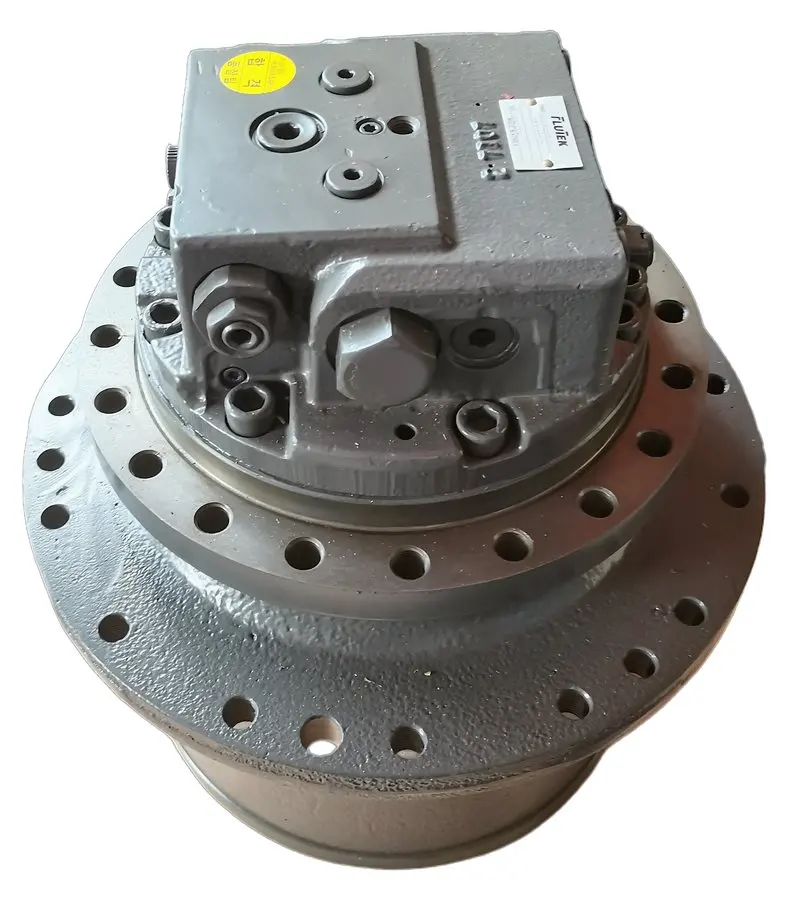
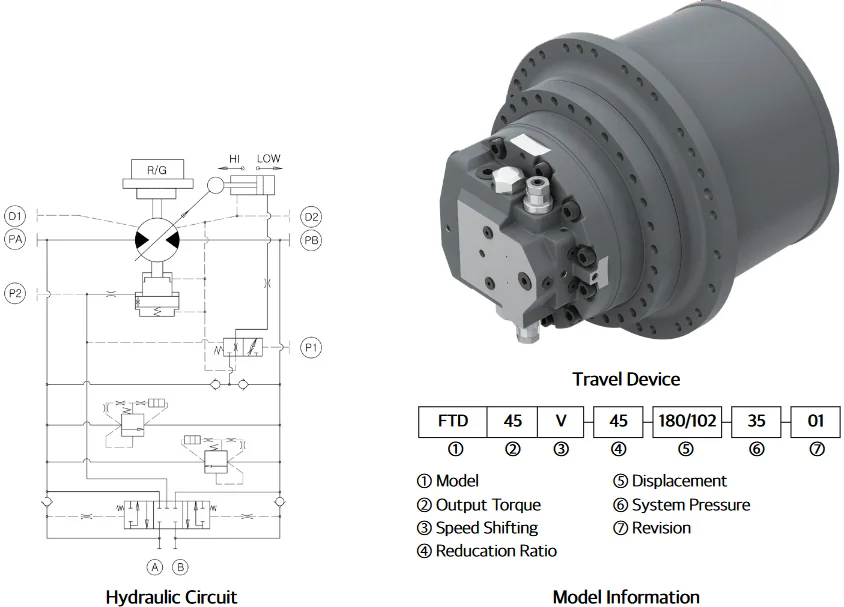
A travel assembly is a motor plus a reducer, sold and shipped as one unit — which is why the quote should state whether the fault is hydraulic or mechanical before it is issued.
Ask for the price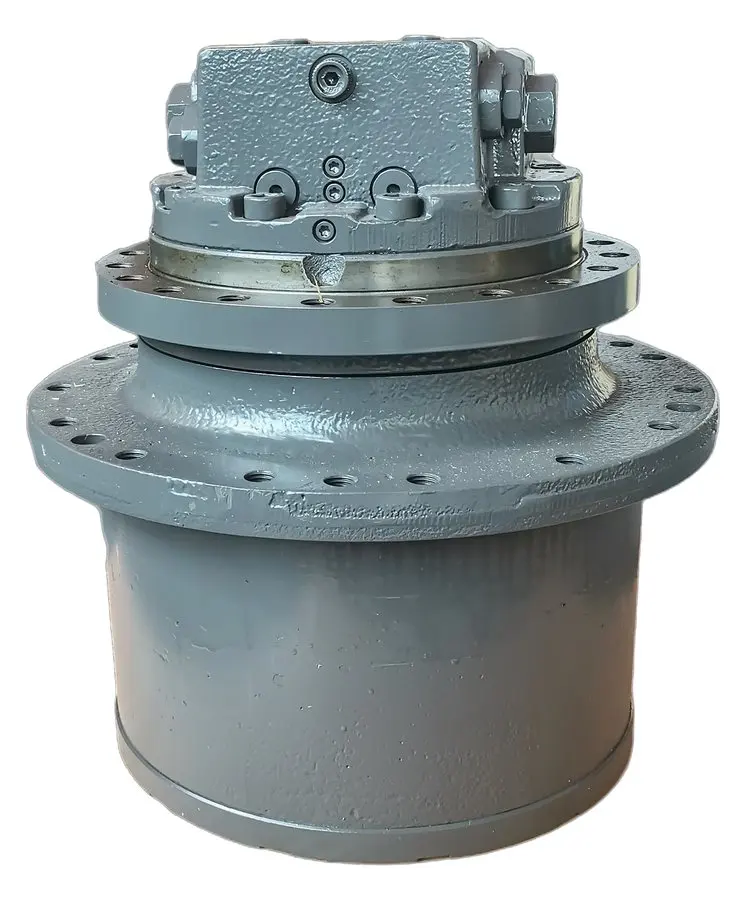
The full catalogue, the data sheets and the company pages live on flutek.com