Before the old unit comes off
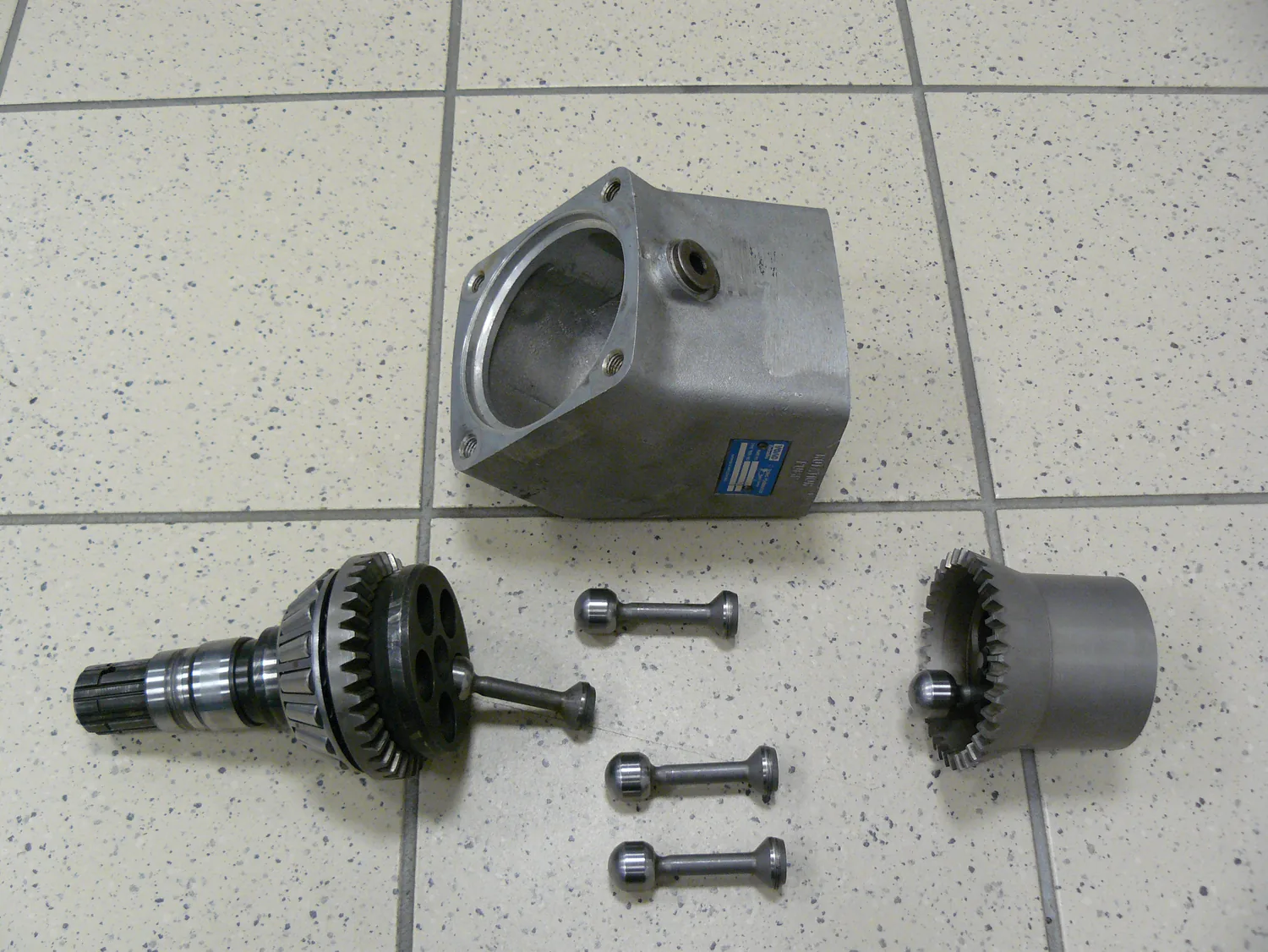
- Cut the return filter open and look at the debris: copper means shoes, steel means block or valve plate. Photograph it — it tells you whether the circuit needs flushing.
- Drain and inspect the tank for water and sludge. Water first, oil second.
- Note the regulator variant and shaft spline before you touch the old unit.
Flush, do not rinse
If metal was found, flush the whole circuit with a low-viscosity flushing oil through a kidney-loop filter until the target cleanliness is reached — typically ISO 4406 18/16/13 or better for the main circuit, and cleaner for servo-controlled regulators. Change the filter after flushing, then again after the first 50 hours.
First start
- Fill the pump case with clean oil before fitting. Never start dry.
- Check the suction line: new O-rings, no cracked flange, no air weep at idle.
- Start at low idle with the functions neutral for 30 seconds, listening for cavitation.
- Run 10 minutes unloaded, then set the main relief and the regulator to the machine's specification — not to the pump's.
- Re-check case drain after the first hour of work; a rising drain is the early warning.
Send the machine plate, the pump plate and the old unit's filter photo with the order. It is the difference between a unit that fits and a unit that comes back.